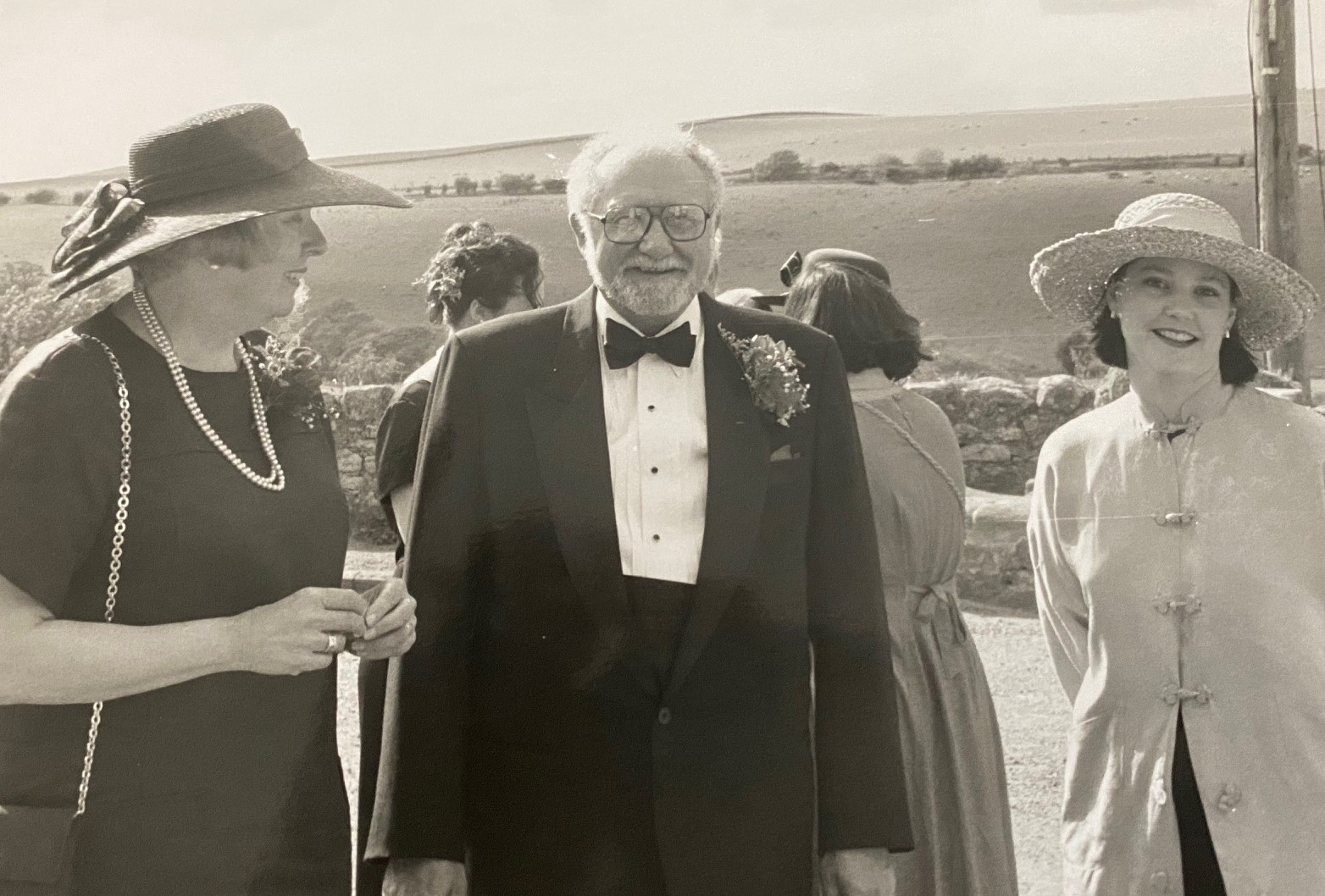
Holidays, 2005. My cousins had gone to bed but I nonetheless managed to weasel my way outside. The grown-ups play Canasta. The air is thick with cigarette smoke. Languid bugs flutter around the dirty porch light.
Sighs. The old man won. Taking advantage of the lull, he begins to tell a story. Despite having heard this same story last summer, the adults lean in. Half listening, I fixate on a moth.
The story goes something like this.
One day I was sitting in my office in downtown Lahore, capital of the Punjab Province of Pakistan, when my secretary entered with the business card of someone asking to see me. The card read Capt. Yusuf Jamal, Director, Arab Cultural Center, Lahore.
Well, I knew there was no such office in Lahore, and I was curious. I asked my secretary to show him in. He was carrying several heavy manila files.
He spoke only a few words of English, just enough to say,
“I am a terrorist. I want to sell information to you.”
I was pretty sure he was either a con man or a madman, but I did want to see what was in those files.
First, we had to find a way to communicate. I used to speak fair Arabic, but it was gone from long disuse. Still, I could understand most of what I heard when spoken slowly. While he had been born in Lahore, he was taken as an infant to Beirut where his parents found work. In Beirut, the first years of school are French medium, and so he had been fluent in French as a child. He could no longer speak it, but he could understand what was said to him.
We communicated in the two languages. He told me he worked for the Abu Abbas terrorist organization. That was the group who hijacked the Italian cruise ship, Achille Lauro. One of the passengers was a paralyzed Jewish American named Leon Klinghoffer whom the hijackers pushed over the side, in his wheelchair, just for the pleasure of watching him struggle and drown. They were an unusually unpleasant group.
Yusuf opened his files and showed me photographs. He said, “Here are the graduates of the most recent terrorist training camp. They are going to safe houses in four European cities to conduct missions this summer.”
The documents convinced me that he was telling the truth. I asked Yusuf to return to my office the following day.
The CIA office in Lahore had just one officer and his secretary/ communicator. The officer was on leave but the secretary sent a cable to Langley with all the details I had. Within minutes they asked me to assure Yusuf they were interested and would send a team of Arabic specialists to negotiate with him. In the meantime, they asked that I continue our conversation.
This was pre-internet and email and cell phones; everybody carried a little address book. Yusuf’s was red. At the end of our last meeting, he took out his little address book and showed me the page with Abu Abbas’s name, with an address and phone in Baghdad. I said, “So you know Abu Abbas well.” He replied, “He is like a father to me.” I asked, “If you feel that way, why are you ready to sell him out?” After a moment’s thought, he said, “Because he is sleeping with my wife!”
I never saw Yusuf again, but the following summer the international press was full of the story of more than a dozen terrorists arrested in safe houses in Frankfurt, Paris, Milan and Madrid, where arms and explosives had been found. There was speculation that hundreds of American and European lives had been saved. For the first and last time, I thought adultery was a wonderful thing.
My maternal Grandfather, Raymond Talmage Peppers, worked for the now-defunct United States Information Agency. During the Cold War, this agency ran the world’s largest public relations operation, equal in budget, manpower and output to 20 of the world’s largest commercial PR firms – combined.
The USIA built libraries in Johannesburg, produced telenovelas in Panama, screened Hollywood films in Panang and read Walt Whitman to audiences in Dhaka. For 46 years, on every hour of every day, they exalted the United States and trashed the Soviet Union in 70 languages across 150 countries, all to the tune of $2 billion a year.
Between 1967 and 1997, Raymond served the USIA in Dhaka, Islamabad, Kabul, Lome, Kuwait City, Lahore and Washington, D.C.
But, unlike my paternal grandfather, he didn’t fight in World War 2. To my young (ignorant) self, this fact alone was enough to designate Ray the less interesting grandad.
Like most kids with relatives overseas, my time with Ray was relegated to family holidays and Christmas-day calls beginning with “turn that off and talk to grandpa.” He died in 2017.
Raymond was renowned for telling excellent stories. He took great pleasure in captivating us with tales of Cold War intrigue, comic mistranslations, and descriptions of far off lands aglow with his unceasing love of culture and beauty. Fortunately, he wrote a handful of them down, eight of which I’ll publish here. Each story captures the remarkable world he passed through.