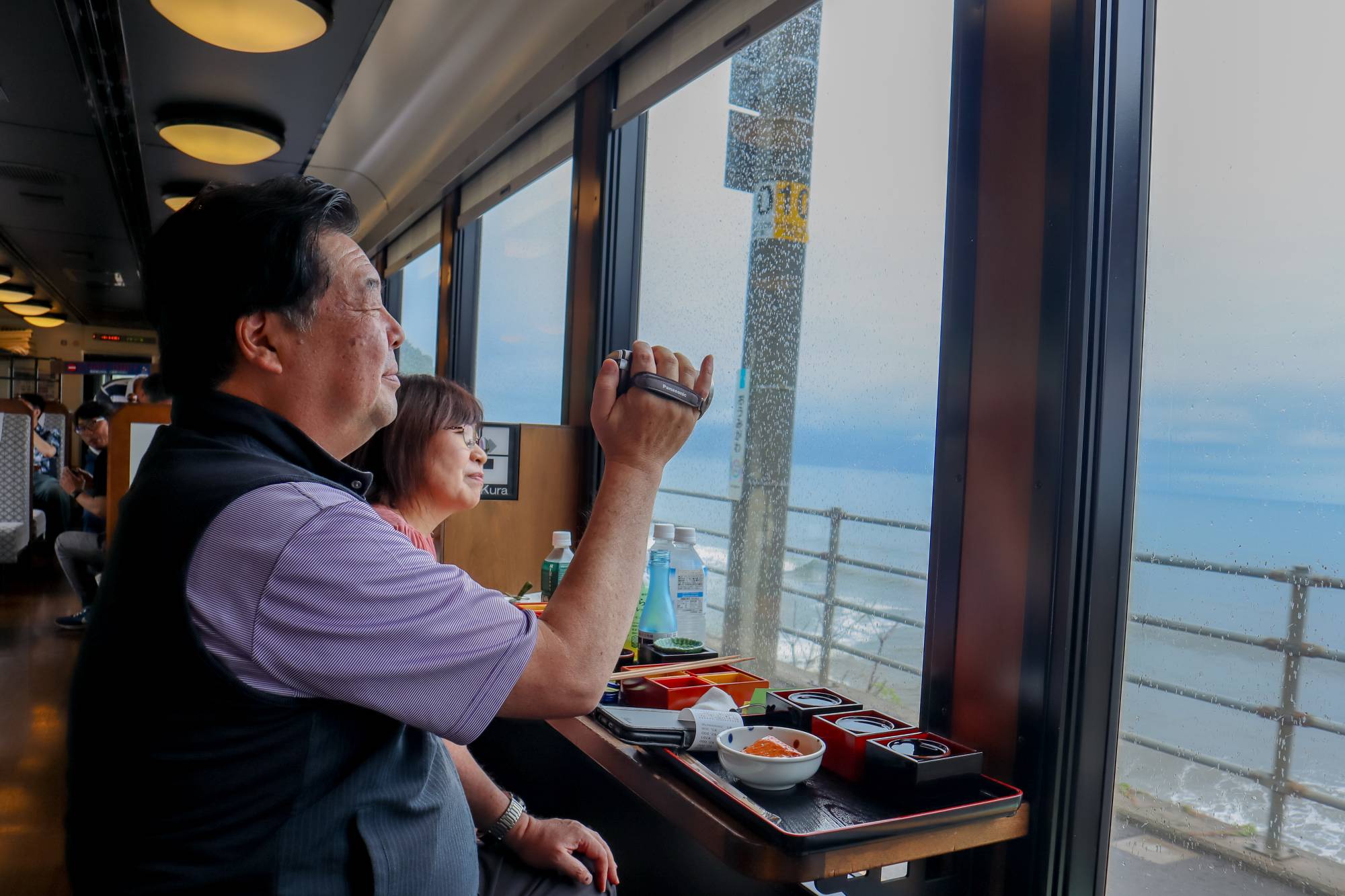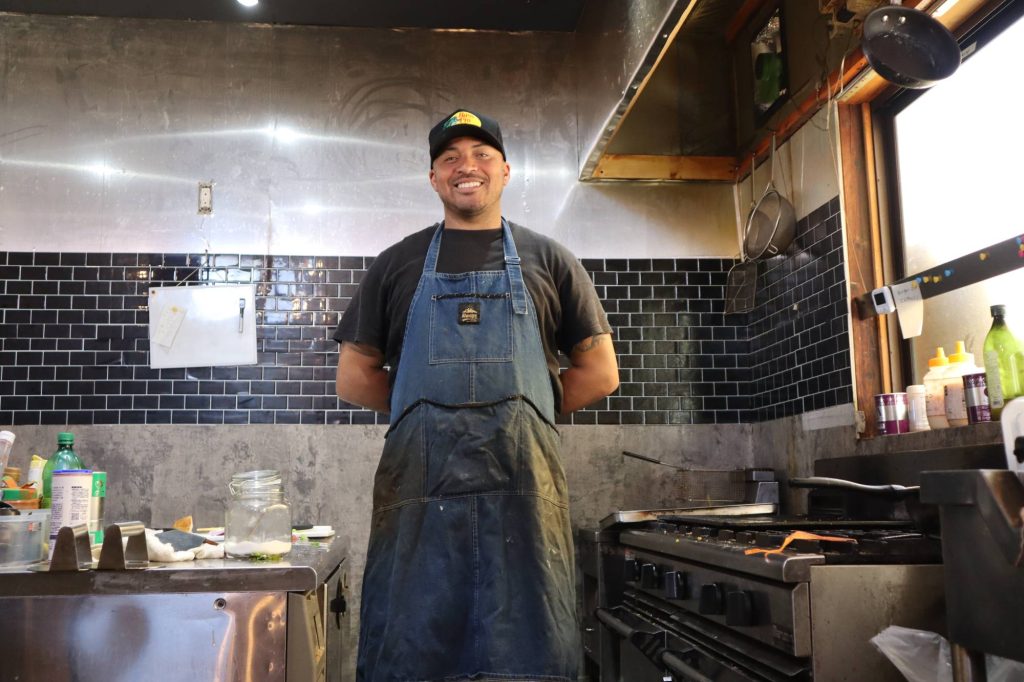
Central Japan is famous for alpine vistas, secluded mountain temples, and onsen-bathing monkeys. It’s less famous, however, for the influential enclave of foreigners who have called the region home for over 100 years.
Central Japan is famous for alpine vistas, secluded mountain temples, and onsen-bathing monkeys. It’s less famous, however, for the influential enclave of foreigners who have called the region home for over 100 years.
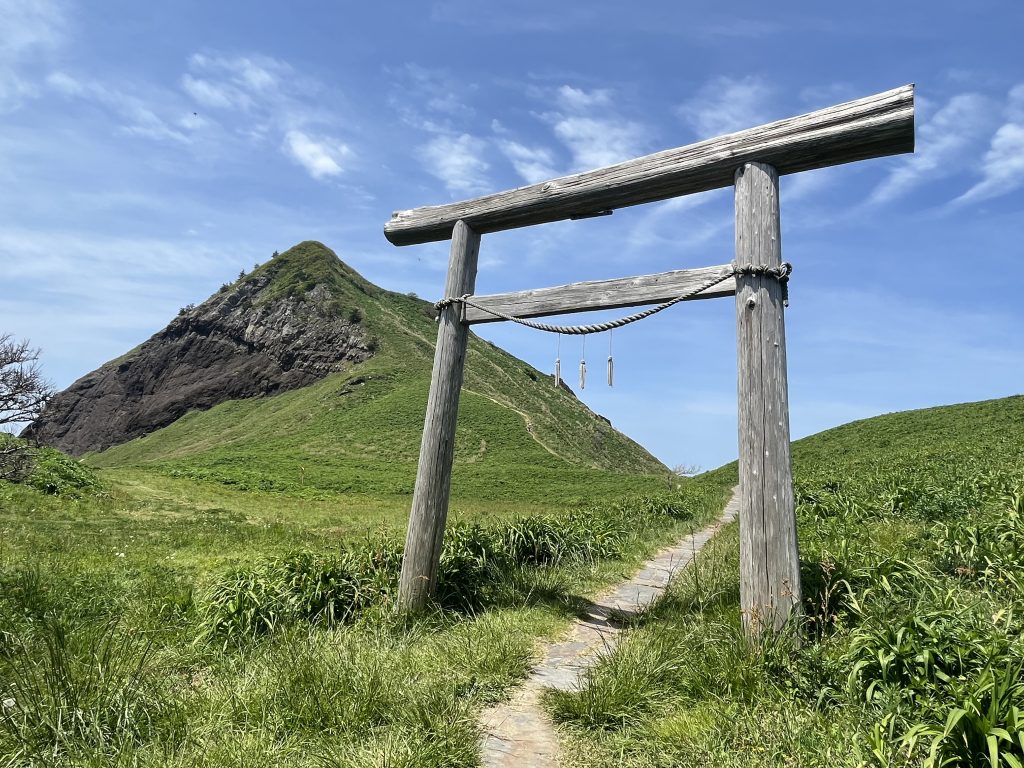
In May, 2023, I travelled the circumference of Sado Island. Off the coast of Niigata Prefecture, Sado floated as a famed place of exile for milenia. Wanting to find out whether the island still accepts vagrants from the mainland, I sought to hitchike around this oft-forgotten part of western Japan.
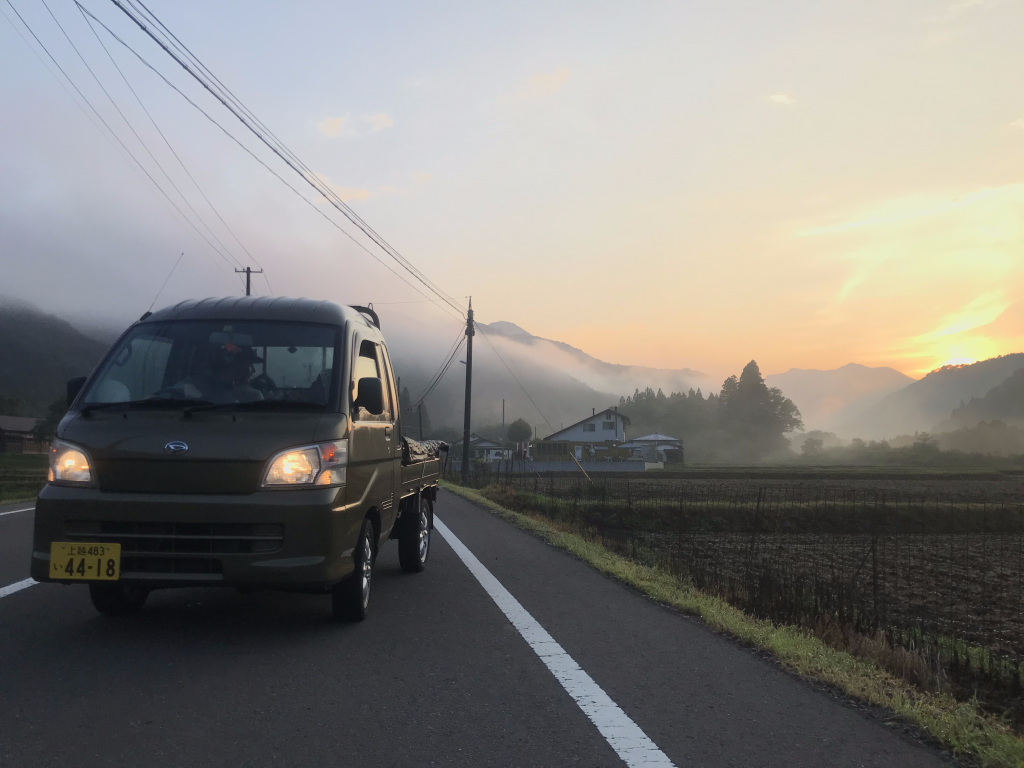
My first ever long-form feature article. It recounts a journey in my little green kei truck, which my college flatmate and I drove from central Japan to its northernmost island. Throughout, I interview travellers, truck enthusiasts, and drift racers to get to the heart of why Japan’s quintessential minitrucks are so loved.
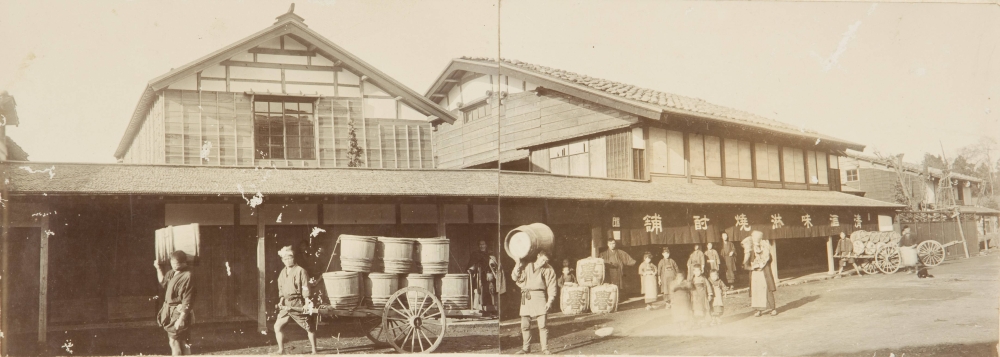
Niigata Prefecture is renowned for its sake (rice wine). In my small town of Joetsu alone, there are several breweries, two festivals, a sake-tasting railway and, until 2004, a high school devoted to brewing a vintage none of its students could drink.
However, in recent years, sake’s popularity has declined. Here’s my article in The Japan Times about Niigata’s relationship with sake and how Japan’s national tipple might bounce back.
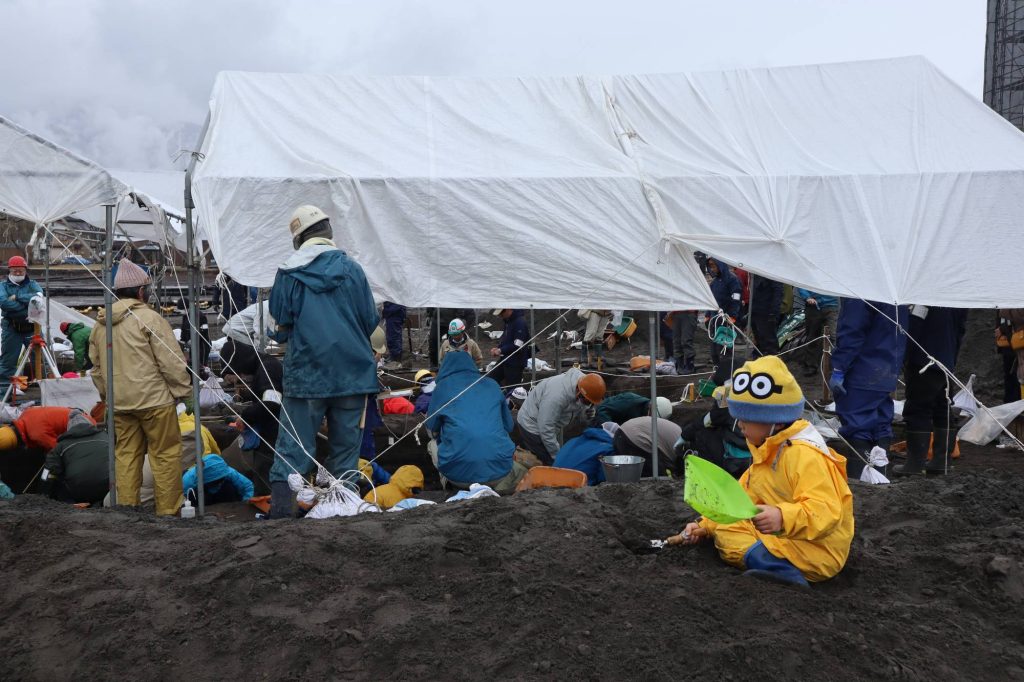
Back on the trail of Naumann’s elephant, I wrote a side story for The Japan Times about the benefits of community-centric archeology.
As it happens, kids like digging in the mud more than they enjoy sitting in a classroom.
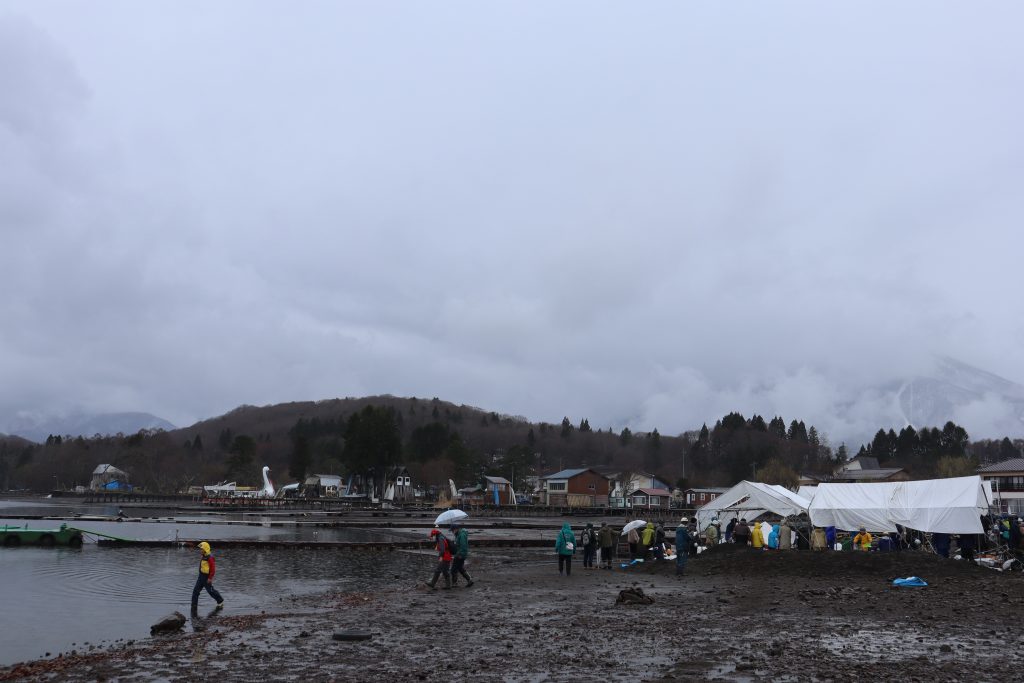
At the close of my second Japanese winter, I managed to get a piece about elephants in The Japan Times. It was the first ever story of mine to appear on the front page of anything, let alone a national newspaper.
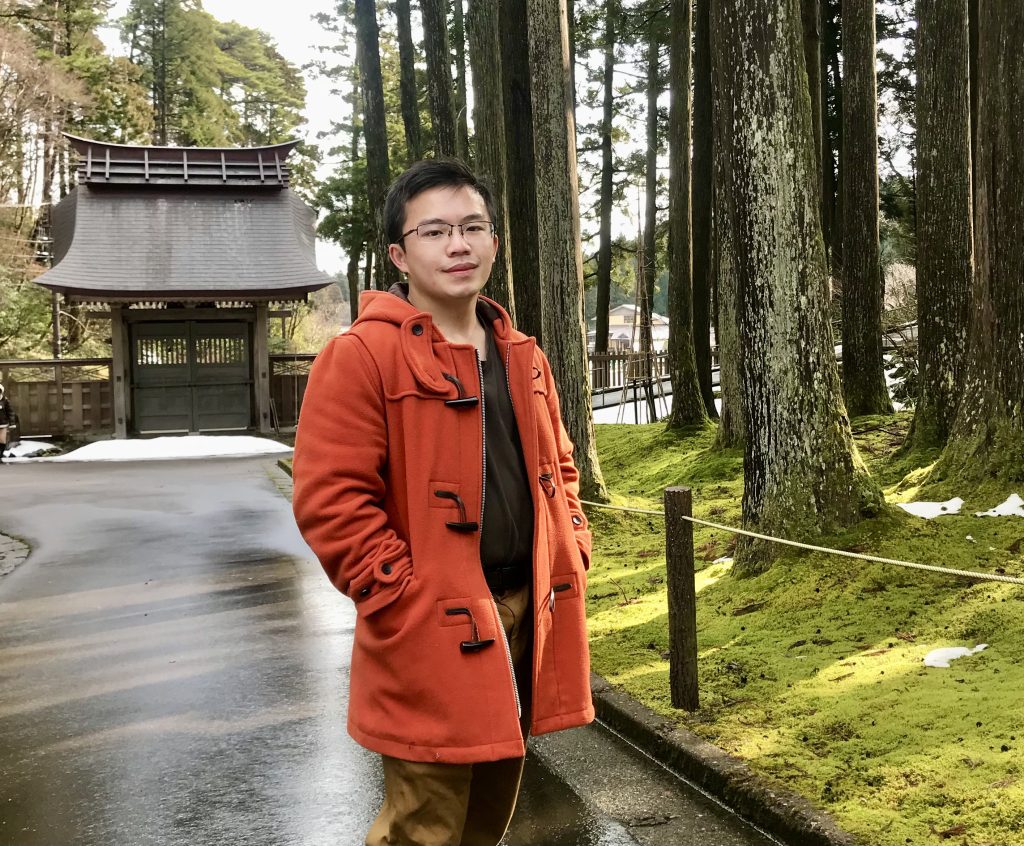
David Leong’s first year was intense but, without hesitation, he signed on for another. Katherine Patz, Hunter Grin and Gogo Salaswat did the same. Over the break, I talked with these ALTs (assistant language teachers) about why they chose to take this leap, and what they want from their second year in Japan.
This article was published in the Japan Times. Click here to read that version. For the unedited version, read on
Gogo Salaswat, 27, lives in Niigata prefecture. She moved there in October 2021 from Tucson, Arizona.
Katherine Patz, 23, lives in Ishikawa prefecture. She is originally from Tulsa, Oklahoma.
Hunter Grin, 25, moved from Manhattan, Kansas to Niigata City in May, 2022.
David Leong, 26, is from Auckland, New Zealand. He’s been living in Niigata prefecture since November 2021.
For our cast of teachers, 2022 was tumultuous. It brought each to thrilling highs and grinding lows. Katherine Patz described her first year in Hakusan, Ishikawa prefecture, in glowing terms.
“I would say my first year has been a really positive experience,” said Patz, “it was honestly such a magical year, I got to do some traveling, I met so many wonderful people, I really fell in love with this area.”
She recalled reading online a litany of horror stories from English teachers in Japan, “I think that fueled so much of my anxiety about coming here,” she said, “it’s easy to go on the internet and be like, ‘that’s gonna be me, I’m doomed’ (…) so I came in super motivated, thinking ‘I’m gonna make friends, I’m gonna be a good teacher, I’m gonna make the most of it.’ I think, to get by, you have to repeat these things to yourself.”
Patz attributes her joyous first year, in part, to this mantra. Another factor was her placement. “I didn’t choose to live in Ishikawa,” she said, “when they asked my preference, I wrote down Kyoto. When I got placed in Hakusan, I had no idea where that was.”
Patz soon found that Hakusan is an oft-rainy corner of western Honshu, home to a community into which she readily integrated. The warmth of that community helped define her first year in Japan.
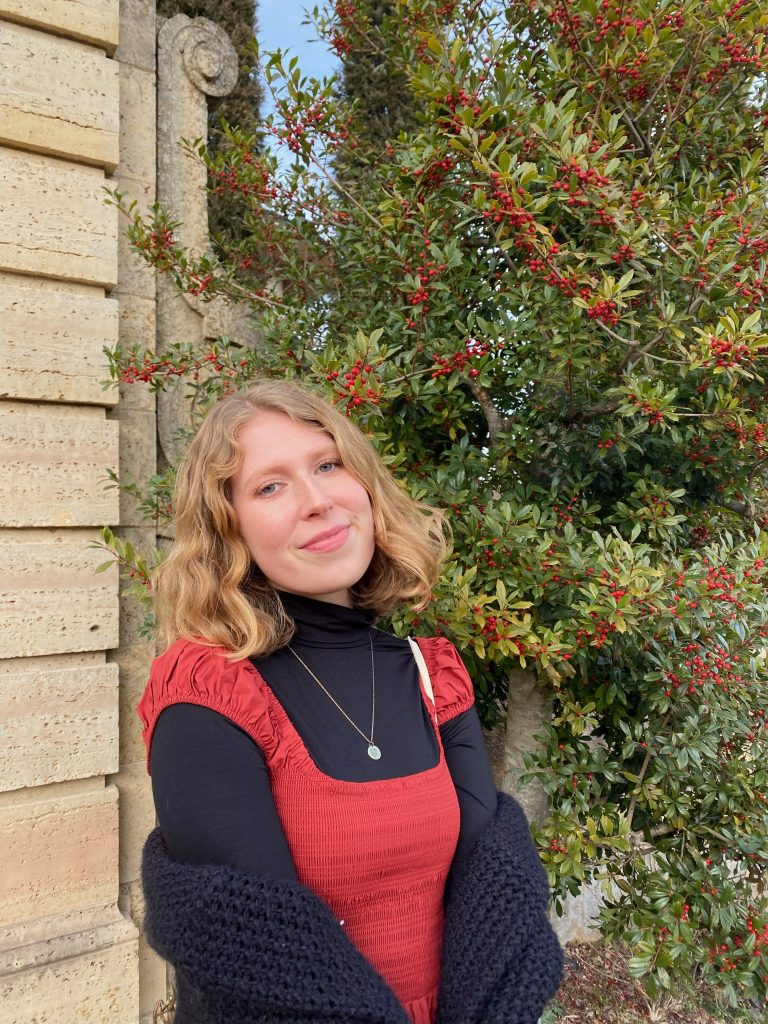
Patz also learned a lot about herself. “I think I built some more trust in myself, I realized I can take on these kinds of challenges and actually do well and thrive.”
Looking back at 2022, Hunter Grin feels a similar sense of achievement. “I’ve never studied abroad outside of my country,” said Grin. “So going off into the deep end and moving to a foreign country where English is not the main language…” Grin paused to consider, “I can say I’m pretty proud of myself for keeping my head.”
Like Patz, he enjoyed his first year in Japan and is eager for more, driven by a desire to get the most out of this opportunity. “I don’t know the next time I’ll be able to go to a foreign country,” he told me, “living here has been one of the top things on my bucket list and I want to stay here as long as I can.”
Gogo Salaswat’s first year was challenging. She lives in Joetsu, a town in the heart of snow country. For an Arizona native and self-proclaimed “desert rat,” the change in climate was especially tough. “I think I was just trying to take it day by day,” she said, referring to the oppressive cold and snow which smothers Joetsu in winter. Adverse weather, knowing no one, and seldom being able to talk with the people she met presented constant hurdles. However, these hurdles uncovered a level of resilience that she didn’t know existed. “I had a lot of new experiences and pushed myself,” said Salaswat. “I think overall, despite the challenges, it was very eye-opening.”
Leong’s first few months were also tough. He too lives in Joetsu, albeit a snowier part. After a grueling winter shoveling snow whilst navigating the pitfalls of culture shock and homesickness, Leong figured that if he could make it in Joetsu, he could make it anywhere.
I spoke to Leong on the cusp of another winter. “The thing that I’ve learned above all is that Japan’s just another place, and you’ll live life no matter what, “ he said, “I think at the end of the day, as long as you’re willing to adapt and be flexible, people can live anywhere. I mean, it’s freaking cold at the moment, but we’re still here having a good time.”
Andrew Spearman, Kristjan Bernot and Clayton Steed have worked as ALTs in Japan for over four years. These experienced teachers have shepard-like roles playing instructor, counselor, guide, and interpreter for new arrivals. Throughout one’s journey teaching in Japan, their perspective is invaluable.
“The first year is all about finding your footing.” said Spearman, “different parts of your life are flung up into the air once you touch ground here. Your second year is when those things start to settle and you find out what sticks.”
Grin’s experience reflects this idea. “I think going into my second year, I can view Japan with less anxiety because I’ve kind of gone off the deep end and done a lot of things that are outside of my comfort zone,” said Grin.“I was stressed about traveling,” he confessed, “but now that I have a grasp of Japan’s trains and a little bit of Japanese under my belt, I really want to start exploring this country.”

Bernot stressed that exploring Japan is crucial in one’s second year. “Now that you have gotten somewhat used to your environment, go outside and meet people,” he said, “the more people you meet, the more connections and friends you can make. With that, your confidence and Japanese skill will improve and it will save you from boredom. This exponentially improves the quality of your life.”
Steed agreed with Bernot. “The second year is your time to really step outside your comfort zone, go to new places and find new experiences.” he said, “be proactive in filling your time, deepening friendships with people you’ve met in Japan, and venturing out to see more of what Japan has to offer. Most opportunities aren’t just going to fall into your lap.”
If Steed could give one piece of advice to his first-year self, it would be to interact with more Japanese people. “It can be easy to go to other ALTs or teachers that speak English,” he said, “but I think you end up missing out on a big part of what living in Japan has to offer if you aren’t talking and being with the locals.”
Obviously, the key to interacting with Japanese people is speaking Japanese. Patz can feel her Japanese improving day after day. This feeling, she said, is a big part of why she’s staying in Japan. “I love seeing how well I was able to speak and communicate this time last year versus now,” she said.
Patz’s measure of language ability will be the friendships she can make and maintain, as well as the depth of conversation that she’s able to hold. “I want to keep creating more relationships and have better conversations with the people I know,” said Patz, “that’s a big reason why I want to stay.”
Beyond improving relationships, Bernot said that studying Japanese is the key to a stress-free life in Japan.“A lot of ALTs struggle with the transition from being a fully functioning member of society in their own countries to being a lot more helpless here in Japan due to not knowing the language.” he said, “knowing and being able to actively use Japanese will help with your mental well-being.”
Salaswat, looking back at her first year in Japan, said that another key to her mental well-being has been the acceptance of imperfection. “I would tell my first-year self to take it easy. I don’t have to constantly compare myself to others, I don’t have to be on my A-game 100% of the time, and nobody expects me to know every answer,” she said.
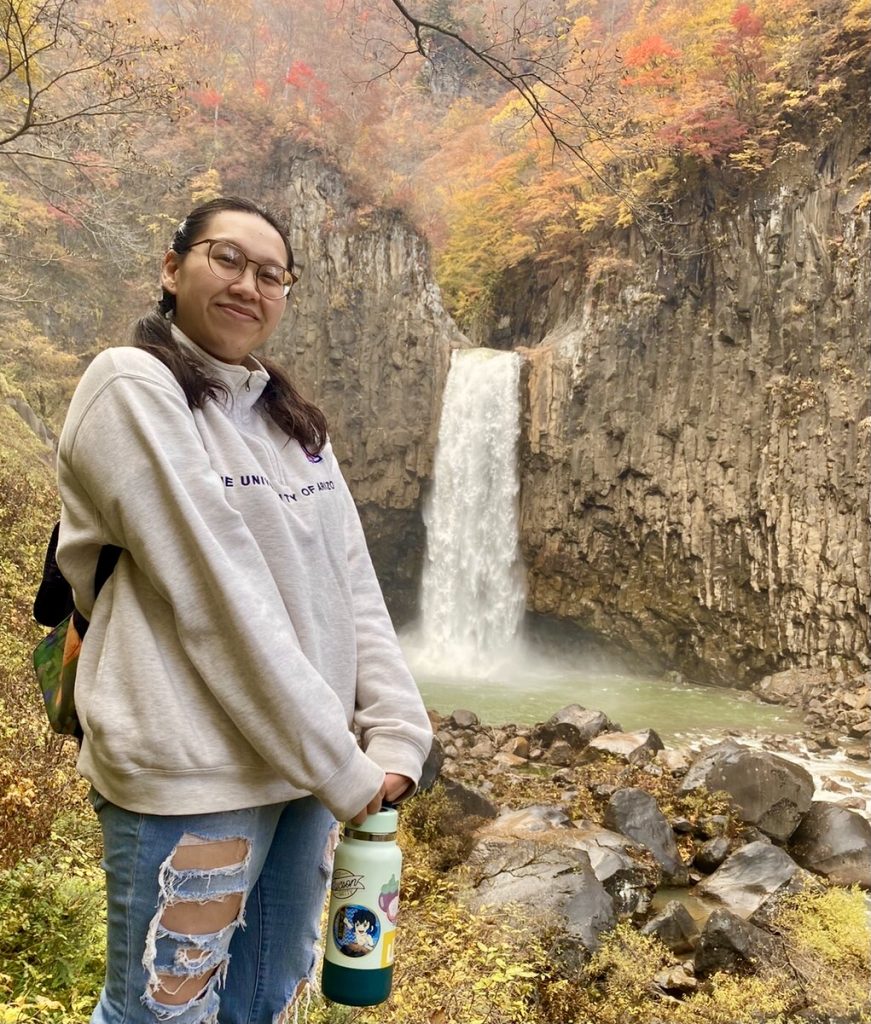
With the temporary nature of her job as an ALT comes a degree of pressure to do as much as possible, unless one misses out on the “perfect” experience. If Salaswat could change anything about her first year, she’d let go of that expectation. “I would not make so many commitments nor feel obligated to do so many activities just because of my role as an ALT,” she said.
Spearman gave similar advice. “To make the most of your second year, try to figure out what your priorities are and then work them into your rhythm,” he said, “if you think the first year went by quickly, they only get quicker.” If Spearman could consult his first-year self, “I’d tell myself to be courteous but to stop wasting time people-pleasing and chasing empty projects. You become your surroundings, so put your energy into the groups, activities, and people who help you grow.”
Accepting imperfection and managing his energy are lessons Leong is excited to take into 2023. For this reason, among others, leaving Japan this year is inconceivable. Like the rest of our cast, he feels as though he’s only just acquired the tools that will help him explore the country the way he wants. “The adventure hasn’t really felt like it’s reached a conclusion.” said Leong, “I feel like there’s just so much more of Japan I can experience.”
If he could give one piece of advice to a teacher on the cusp of re-applying for a second year in Japan, Spearman would say this, “practically speaking, just ask yourself what kind of person you want to be or what kind of skills you want to have at the end of the experience,” said Spearman. “Stay as long as you need to in order to make that happen.”
Spearman also added that, between choosing to stay or leave Japan, neither decision is wrong. “Be happy with whichever decision you make.” He advised, “back home, you have friends and family who love and miss you. Here in Japan, you’re budding new friends and you’ve still got so much more that remains undiscovered. Both paths will lead to your growth. Your loved ones shouldn’t mind waiting for you, and Japan isn’t going anywhere either.”
Teaching in Japan isn’t for everyone. Japan isn’t for everyone. For every enthusiastic teacher signing on for another year in 2023, as our cast have, there’s also a story like Tim Lomax’s.
Lomax moved from New Zealand to Tottori prefecture in late 2021. His move to Japan marked the natural conclusion to a lifetime of interest in Japan and its culture. A talented photographer, Lomax traveled to Tohoku in the wake of 3/11 where he produced a moving series of portraits that further confirmed his desire to make Japan home.
In the nervous period before leaving home, Lomax was the picture of calm. He’d worked too hard to not make it to Japan, he told me. He felt in his bones that it was where he was supposed to be.
Yet, after an inaugural winter marred by illness and family tragedy, Lomax was struggling. Some days, he could barely leave his bed. He felt isolated, driving daily to the same desolate school staffed by teachers unable to help him in the ways that he needed. He eventually cut his contract short and left Japan, returning home the following spring.
Lomax’s story exemplifies the acronymic mantra for foreign English teachers in Japan, ESID – Every Situation Is Different. No matter one’s motivation, one’s skillset or optimism; in the wrong situation, anyone can falter. What’s important to remember is that that’s okay. Moving to another country is a big decision. Remaining, equally so. It bears repeating Spearman’s belief that, as with all such decisions, there are no wrong answers.
Across each conversation I had with Patz, Grin, Salaswat and Leong, there was a profound sense that their adventure in Japan had only just begun. After an intense year rocked by culture shock, language misadventure and the pitfalls of living alone, this lucky group found their sea legs.
With that discovery came a renewed sense of determination; to learn: to meet new people: and to strike out across their adopted home with confidence. “I still have yet to see the northernmost point of Japan, the southernmost point of Japan and everything in between,” said Leong, “after that, I’ll go home.”
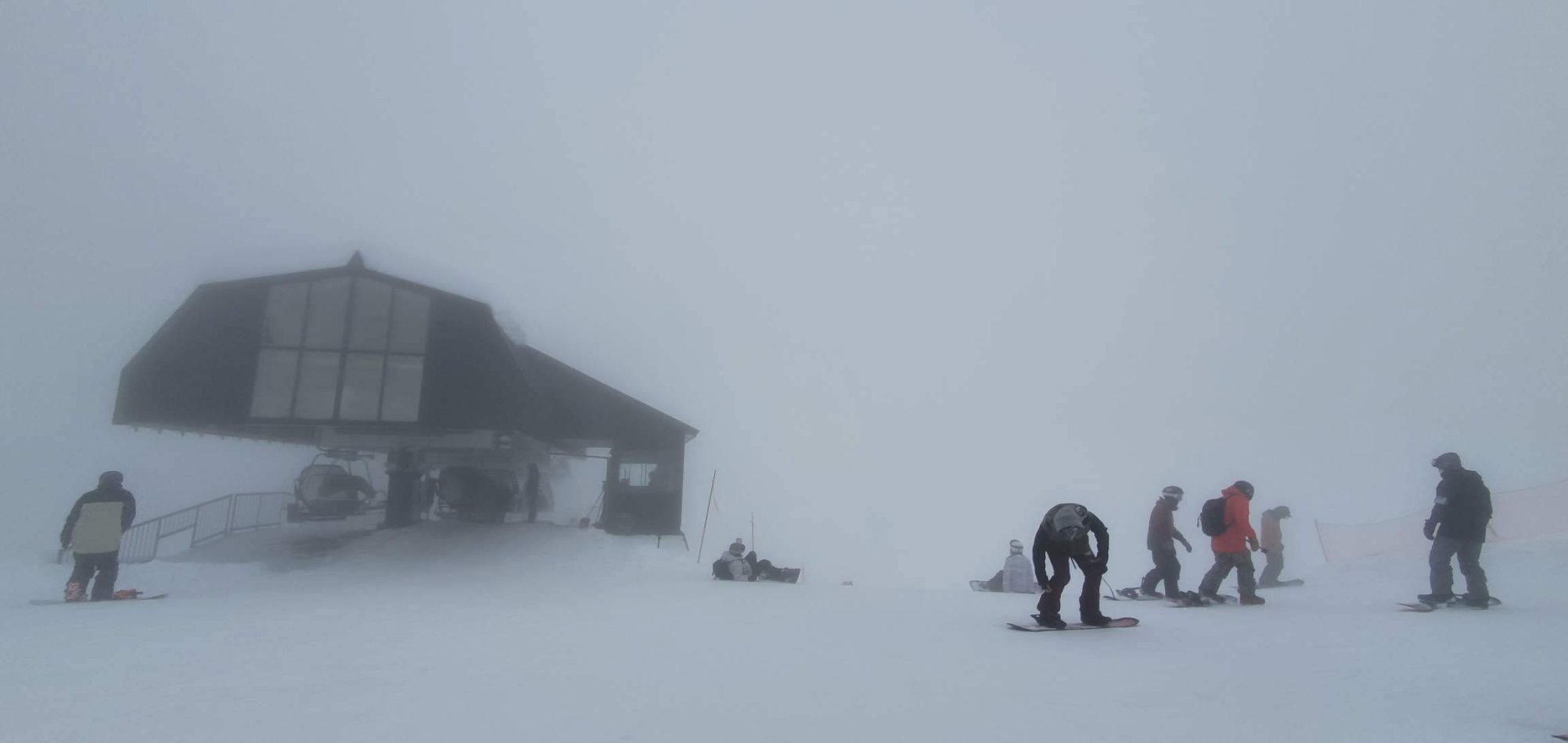
Jennifer Roche sat at her desk and stared out the window. The snowy deluge showed no sign of stopping. Scores of thick clumps fell in an endless barrage, covering everything under the sky in a bulging carpet of white.
She expected to hear at any moment that school was closed, that she was being sent home, or any kind of response to the act of God unfolding outside. “There was no such announcement,” said Jennifer, “that was just kind of what every day was like for the rest of winter.”
Mountains surround Jōetsu on three sides. In winter, they block Siberian squalls from the west, directing their moisture back up into the sky and down onto the city. The result is a disturbing amount of snow. In January alone, Jōetsu receives an average of four meters of powder – that’s almost two Shaquiel O’Neil’s.
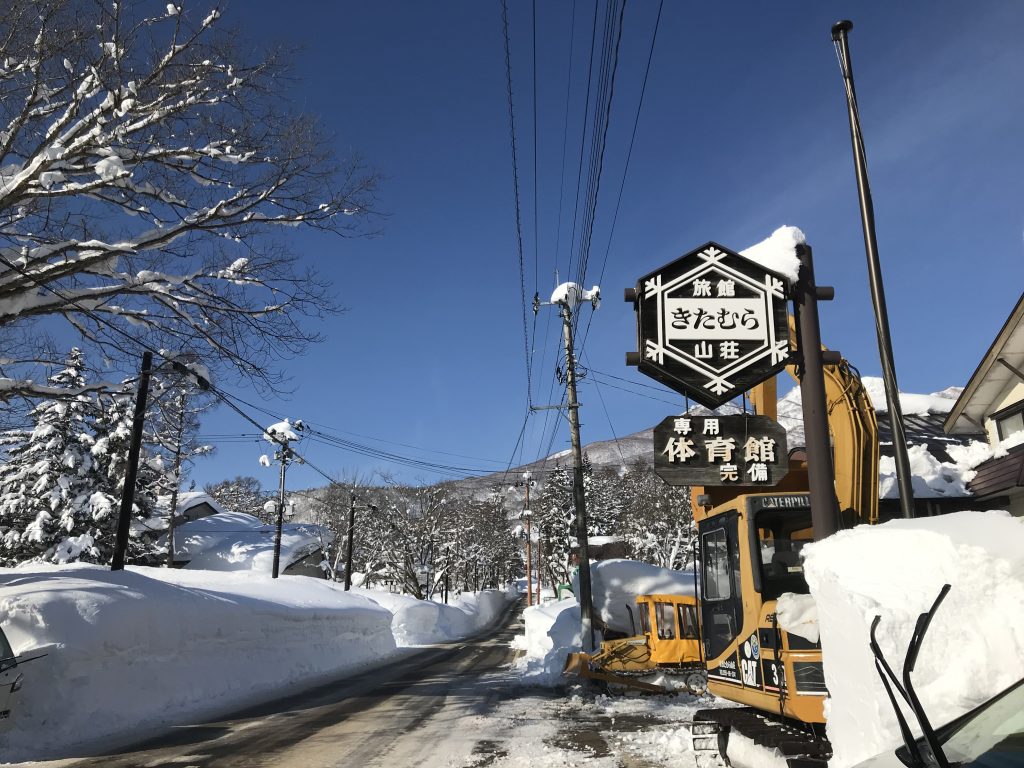
“The most surprising thing was hearing that that winter was normal,” said Jen who, like me, experienced her first apocalyptic Jōetsu snowfall in 2022. By all accounts, that year’s bombardment was mild; although the city’s bar for “mild snowfall” is still far higher than most places on earth.
The previous winter, however, was a different story.
Takuma Kobayashi, a Jōetsu resident of some 30 years, witnessed the winter of 2020/21. He recalled, “on the big road outside my house the snowplow couldn’t come for one week, you couldn’t see anything. (…) Tsune (our mutual friend) came to pick me up from Kakizaki. It’s usually a 30 minute drive but it took him three hours. His landcruiser got stuck in the Aoki parking lot and many other cars were stuck on the road.”
In January 2021, the city designed to weather two Shaq’s-worth of snow per-month ground to a halt after 3 meters of powder fell in one night. Residents couldn’t access roads and some could barely leave their homes. According to local news, four people died and 33 were injured.
In past winters, before the invention of snowplows, Jōetsu’s economy survived this recurring apocalypse thanks to a network of covered walkways called Gangi Dori. These coverings, many of them over a century old, still line the city centers of Naoetsu and Takada. Countryside folk bereft of this infrastructure had to make do by other means: they tunneled between buildings like moles.
In those days, a handful of people looked upon Jōetsu’s blizzards with glee: the Uesugi. They were the denizens of Kasugayama Castle, one of Japan’s five great mountain citadels.
Kasugayama Castle lay to the west of Jōetsu’s city center, overlooking the highway between Naoetsu and Takada. For all its towers and parapets, the Uesugi knew their greatest defense was Jōetsu’s snow; a yearly barrier no army could hope to assail. Surrounded by walls of powder, the likes of Uesugi Kenshin could retire to their keep and scheme.
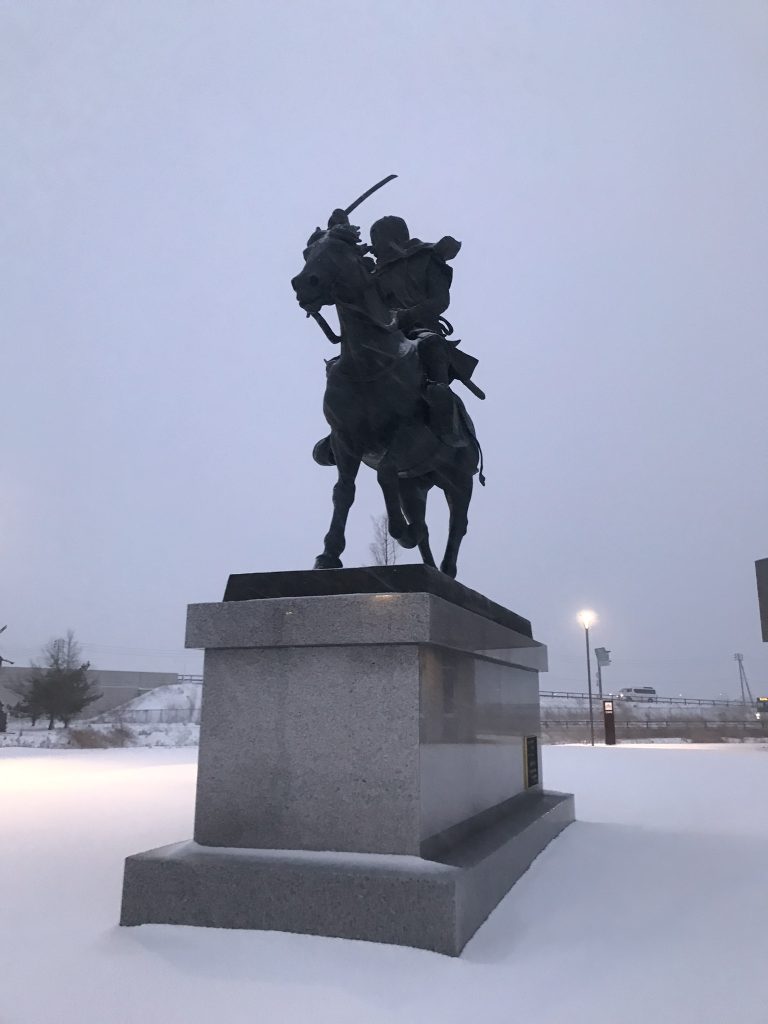
In his half-buried fortress, Kenshin planned campaigns that earned him a place among Japan’s most cunning and tenacious samurai. Official records say he died from a stomach ache. Yet, according to another story, the warlord met his end when a spear-wielding ninja snuck into his latrine pit. Regardless, the snow saved Kenshin from neither. He is buried somewhere on Kasugayama.
In late February, I ventured up the hill in ski pants and snow boots, determined to find Uesugi Kenshin’s grave. I soon came to a forested cemetery, amidst waist deep snow and surrounded by eerie, spherical headstones. I waded deeper into the woods until I found a clearing. In the middle was a particularly grand monument. This wasn’t Kenshin, but one of his lieutenants.
As I stuffed the cemetery map back into my jacket, a thunderclap rang out and the sky turned the color of slate. The wind picked up tremendous force as it shrieked through the trees, ejecting roosting crows in a din of angry barks.
All of a sudden, that graveyard was the last place I wanted to be. Pelted by a sudden hailstorm, I waded down the mountain with inhuman speed. Even today, its castle barely a ruin, Kasuagayama proved unassailable.
Like Uesugi Kenshin, Takuma relishes Jōetsu’s snow. He likes to ski; “powder hunting” as he calls it. In Jōetsu, Takuma doesn’t have to look far for this quarry; the town nestles amidst some of the world’s best ski resorts, renowned for their powder snow.
Jennifer started skiing last year. On the mountain, she took in sweeping views of the alps while enjoying a physical activity that, while exhilarating, was also social. “It was really nice to do an activity and have people you could chat or spend time with,” she said, adding that many of her enduring friendships blossomed on the ski field.
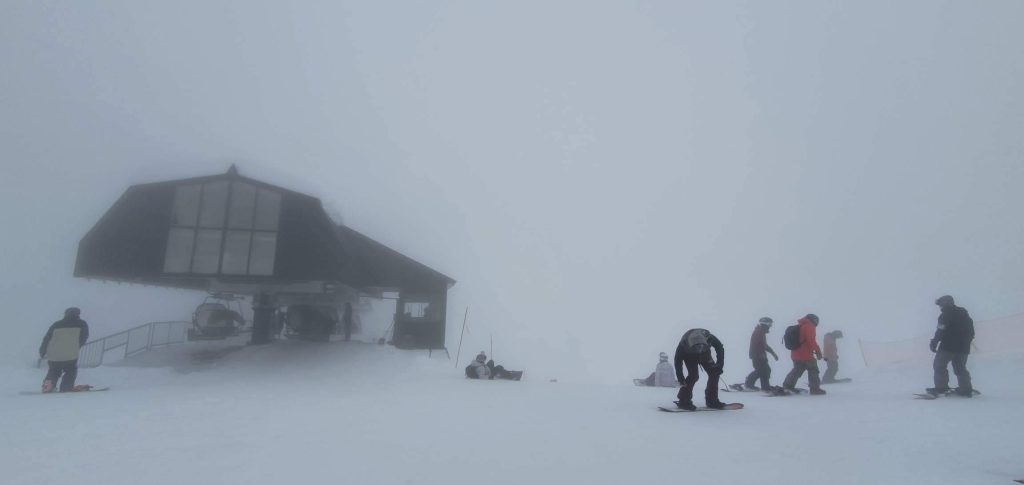
The weekend ski trip became equivalent to hitting the town (convenient, as Jōetsu has no nightclubs). It was the social highpoint of weeks spent beneath snowdrifts, huddled under a heated table, alone for one’s thoughts and a bevy of Netflix offerings.
Little grows under a Jōetsu snowfall save a feeling of profound isolation. I felt this gloom creep into me week by week, to spite the excitement of being in Japan. Gogo Salaswat felt something similar.
“I was like, oh yeah, seasonal depression. I get it every year,” said Gogo, Arizona native and self-proclaimed “desert rat”, “but I never realized how bad it could get until I lived a different season the way that season is supposed to be lived. I was just like, man, this is it huh, this is how it goes.”
It stands to reason that intense winter blues would accompany an intense winter. For me, potent FOMO (fear of missing out) compounded this pestilence. From December through February, I watched a New Zealand summer come and go on my phone. I doggedly sought the kind of fun my friends were having back home, but the ski field, onsen and occasional bouts of drinking never felt like enough.
Eventually, I accepted that I was never going to recapture that kind of fun in Japan – the unparalleled highs of being out with old friends, amidst the music you love in the town you grew up in. Those highs were out of reach no matter how long I looked back. Instead, I had to find new highs, and trust home would still be there when I returned.
In the meantime I shoveled, sipped a range of soups, drank, and skied to shake my soul free of winter’s bitter grip. In time, the snow thawed. The once-vast carpet of white shrank to dirty mountains by the side of the road, reduced daily by each rainfall and moment of sunshine. No new flakes fell on Joetsu. The city, long buried in a state of near-hibernation, began to stir. Shops that were closed for the winter reopened. The days grew longer and sunnier, and the streets began to swell with passersby.
Spring arrived, and I’d almost made it through winter without doing something foolish. Almost.
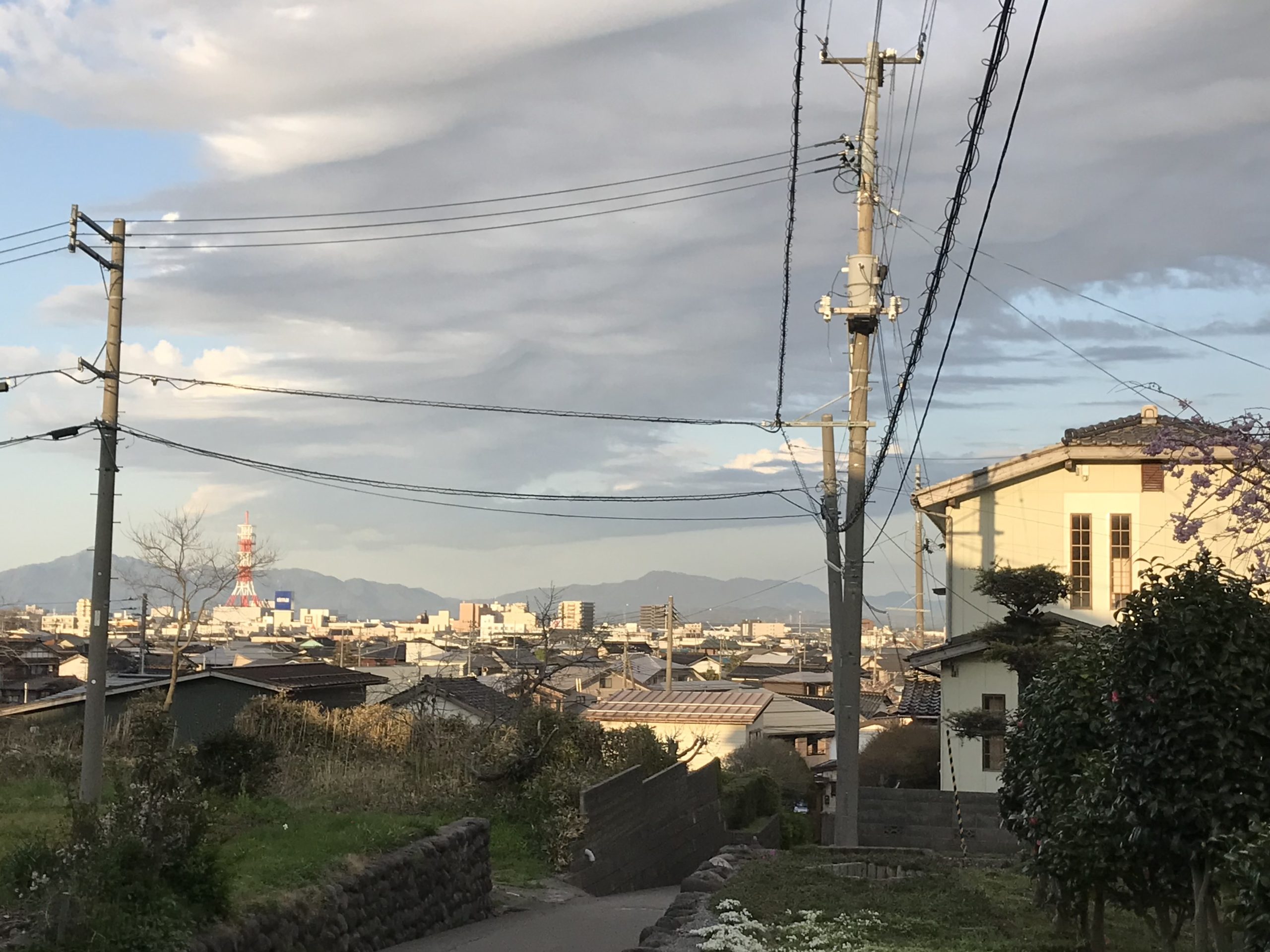
One year and two weeks ago, I moved to a town on Japan’s west coast named Joetsu. On my third day, a local told me that I’d landed the best placement in the country. I looked out the car window, through the rain at the growling motorway under a sea of sooty clouds, and silently disagreed.
Joetsu sprawls along a river valley that empties into the Sea of Japan. The city itself is an amalgamation of several municipalities, among them the once-heaving port of Naoetsu and the moated inland bastion, Takada.
In 1971, Takada and Naotsu merged, whereupon the authorities created a new cultural and administrative center in the 8km of farmland between the two towns. This became Joetsu’s official center, a dingy array of offices and motorways where I spent my first few days as the city’s newest resident.
For many who drive through Joetsu, this is all they see. One such tourist was Australian travel writer Richard Pendavingh, who visited in 2005. He had this to say,
“Joetsu was a maze of tightly-packed low-rise houses without gardens or street trees interspersed by windswept concrete plazas and big, blocky commercial buildings (…) the atmosphere wasn’t helped by the fact that the streets were empty and the weather was dismal but even on a good day I got the sense that it wouldn’t have been a very pleasant place to live.”
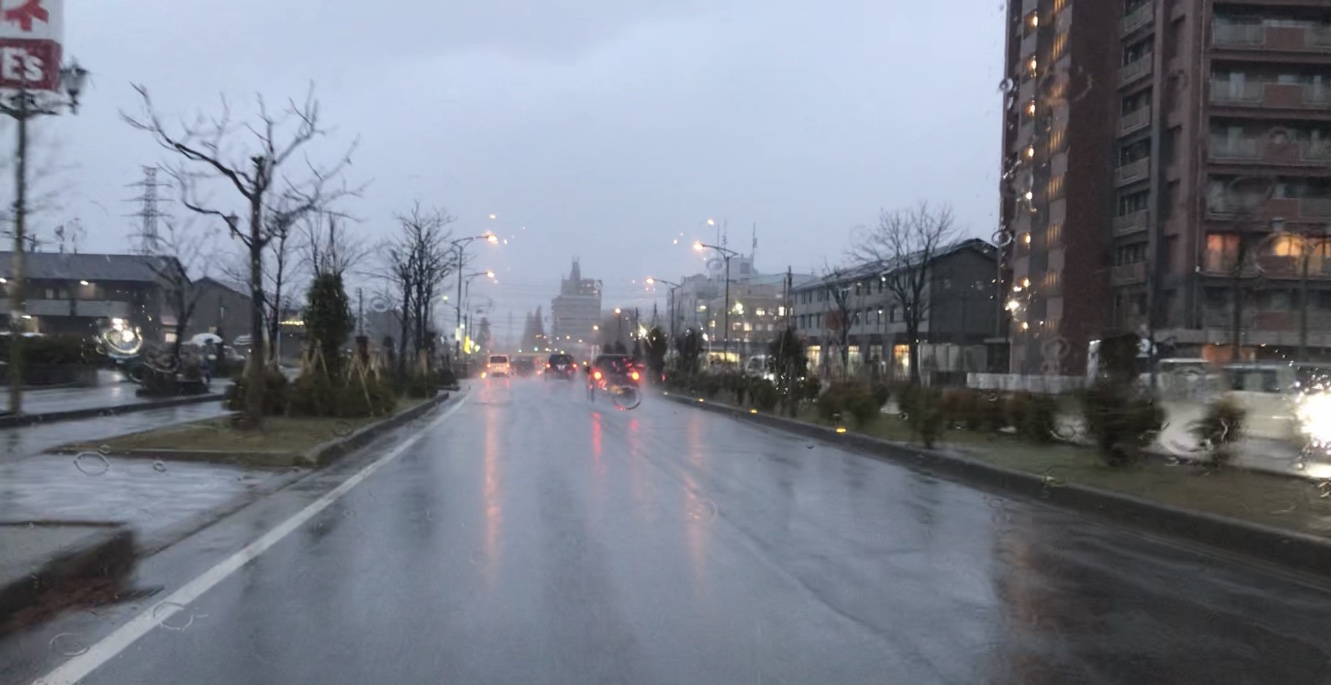
Richard only seemed to have been in Joetsu for one day some 17 years ago. After one year of living In Joetsu I can say he is unequivocally wrong about one thing: we do have street trees.
Richard, however, was spot on with his illustration of the city center and even more so with his description of how Joetsu’s heinous weather and weatherbeaten buildings make for a grim atmosphere. This was the town I entered back in November, 2021. Then, in December, the snow came.